Compare the adhesive specification with the actual package surface and application conditions. A clean print does not establish a reliable bond.
Peeling corners are usually investigated at the label-and-package interface. Changing printer darkness will not turn an unsuitable adhesive into the right material for a cold mailer, textured carton, or other difficult surface.
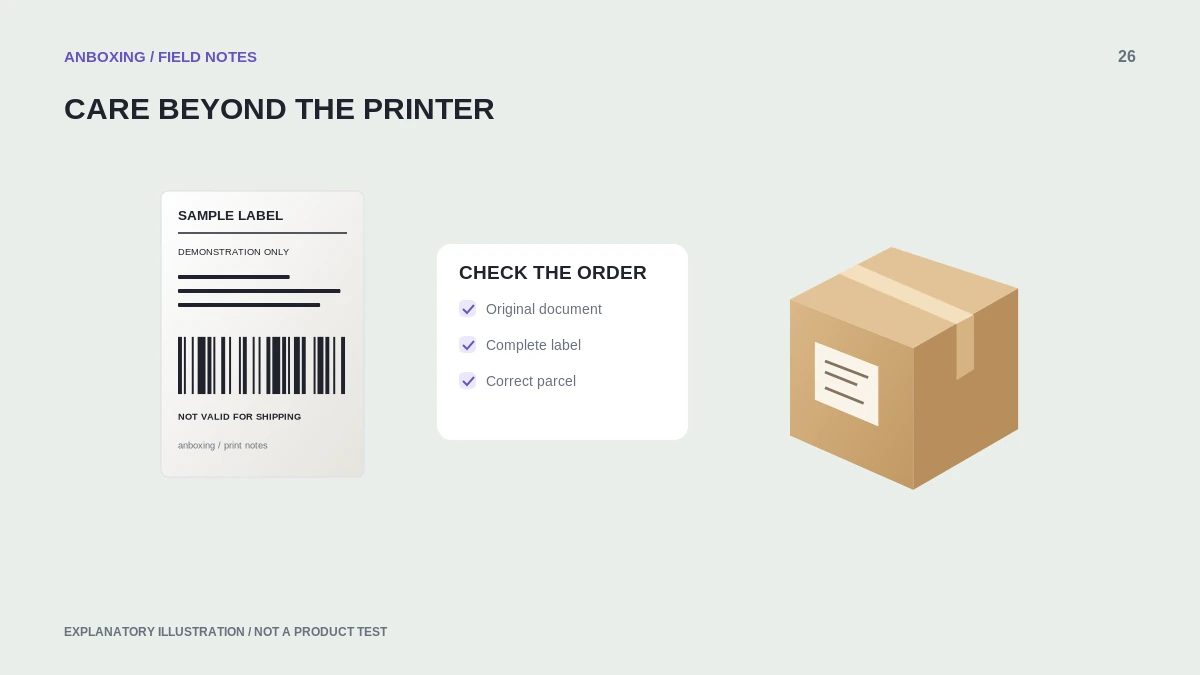
Separate the three material questions
| Question | Why it matters |
|---|---|
| What is the label face material? | It affects the label's physical durability. |
| What adhesive is specified? | It must suit the surface and conditions. |
| When and where is it applied? | Application conditions can differ from later service conditions. |
Zebra’s material specifications distinguish minimum application temperature from the temperature range after correct application and dwell time. That distinction is more useful than a vague claim that a label works in the cold.
Zebra: PolyPro 3000D material specifications and test limits
Inspect a failed label
- Keep the label and package together so the exact surface remains known.
- Check for dust, moisture, condensation, oils, a loose coating, or an uneven seam at the application point.
- Read the adhesive and application requirements on the supplier’s data sheet, not only the marketplace listing title.
- Apply a fresh sample to the intended clean, dry surface under the specified conditions, using the recommended pressure.
- Allow the specified dwell time before evaluating the bond.
- Compare the sample with a second package material to see whether the failure follows the surface or the stock.
Keep a useful sample record
Record the stock name, supplier lot when available, carton or mailer material, application conditions, and time until lifting appears. Photograph the location of the failure. A corner that crosses a fold can fail differently from a label applied entirely to a flat panel.
Do not assume that every permanent adhesive performs the same way. Ask the supplier for a sample intended for your surface and workflow before purchasing a large case. The adhesive that works on one carton coating may be unsuitable for another package material.
Do not hide the wrong material with random fixes
Avoid heat guns, extra liquid adhesive, or aggressive chemicals as an improvised way to make shipping labels stick. These can affect the package or printed image and introduce another unknown. Follow the carrier or platform’s instructions for any protective label pouch or other approved method.
Storage also matters: keep unused stock in the conditions its supplier specifies, and compare a fresh sample when an old roll begins behaving differently. A small application trial on your real packaging is more informative than a supplier photo showing a label on a different surface.
Common questions
Does permanent adhesive mean it sticks to every surface?
No. Check the actual material specification and test on your package.
Is the lowest service temperature also the application temperature?
Not necessarily. Manufacturers may specify different limits for applying the label and for later use after bonding.
Sources & scope
Source-based editorial guide. Primary references checked September 9, 2026. Diagnostic sequences and comparisons are editorial guidance, not results of hands-on product tests. Confirm current instructions and compatibility for your exact model.