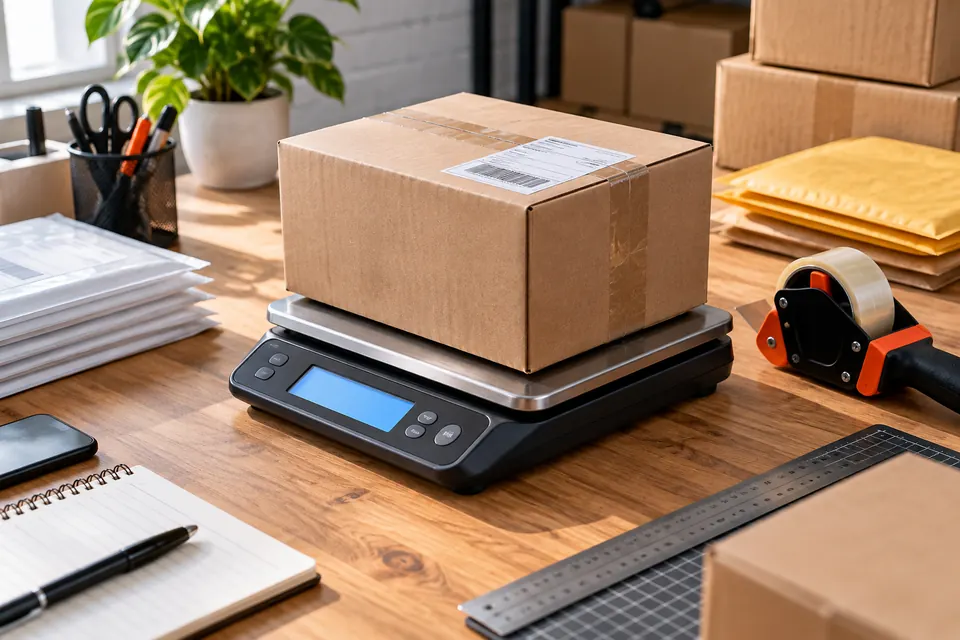
Quick answer
Confirm the package is within the scale’s maximum capacity. Place a rigid lightweight riser on the platform if the manual allows it. Then repeat the same task once before changing another variable. That small control test is more useful than a long list of random fixes because it shows whether the symptom actually follows the part or setting you changed.
Capacity, graduation, hold behavior, calibration mode, and legal-for-trade status vary by scale. Use the exact model number for any instruction involving calibration, firmware, batteries, heat, disassembly, or electrical parts.
What usually causes this problem
1. Display is blocked by the box
This can produce the same outward symptom as a more expensive failure. Check it directly before replacing parts: change only this variable, repeat the same task, and compare the result.
2. Package touches the table
This can produce the same outward symptom as a more expensive failure. Check it directly before replacing parts: change only this variable, repeat the same task, and compare the result.
3. Package is wider than the platform
A scale measures force through its platform, so setup matters. When package is wider than the platform, the display can be repeatable but still wrong, or unstable enough to change postage decisions. Test on one rigid surface before touching calibration.
4. Weight shifts while reading
A scale measures force through its platform, so setup matters. When weight shifts while reading, the display can be repeatable but still wrong, or unstable enough to change postage decisions. Test on one rigid surface before touching calibration.
5. Capacity is exceeded
This can produce the same outward symptom as a more expensive failure. Check it directly before replacing parts: change only this variable, repeat the same task, and compare the result.
Work through these checks in order
- Confirm the package is within the scale’s maximum capacity. Record what happens before moving on.
- Place a rigid lightweight riser on the platform if the manual allows it. Record what happens before moving on.
- Tare the riser before adding the package. Record what happens before moving on.
- Make sure the package touches only the riser, not the table or wall. Record what happens before moving on.
- Use hold mode if your model supports it. Record what happens before moving on.
- Repeat the reading once before buying postage. If the symptom remains, you have ruled out several common causes without making the setup harder to restore.
Fast diagnostic table
| What you notice | Best next check | What the result tells you |
|---|---|---|
| display is blocked by the box | Confirm the package is within the scale’s maximum capacity. | If the symptom changes, keep that variable isolated and repeat once. |
| package touches the table | Place a rigid lightweight riser on the platform if the manual allows it. | If the symptom changes, keep that variable isolated and repeat once. |
| package is wider than the platform | Tare the riser before adding the package. | If the symptom changes, keep that variable isolated and repeat once. |
| weight shifts while reading | Make sure the package touches only the riser, not the table or wall. | If the symptom changes, keep that variable isolated and repeat once. |
What your test result means
If the problem disappears after one change, restore the original condition once—when it is safe—to see whether the problem returns. A repeatable before/after result is much stronger evidence than a single successful attempt. If nothing changes, put that setting or component back the way it was and continue to the next check.
If the problem began after moving the scale, changing batteries, switching units, adding a riser, or using a much larger parcel, reverse that one change first when safe. Timing does not prove the cause, but it gives you the highest-value first comparison.
Common mistakes to avoid
- Buying postage from a reading that is still moving or inconsistent.
- Confusing decimal pounds with pounds-and-ounces.
- Calibrating before checking the surface, power source, and zero reading.
- Letting a large parcel touch the desk or wall while it is on the scale.
When to stop troubleshooting
- Do not balance a heavy package precariously.
- Use a larger platform scale when the package cannot sit safely and freely.
- If the reading remains inconsistent, use a second verified scale or a carrier counter before purchasing postage.
What to record before contacting support
Record the exact scale model, displayed unit, package weight, whether the reading repeats, power source, and whether the package touches anything around the platform. Also note what changed immediately before the problem began and which check changed the result. This turns “it does not work” into evidence a support technician can actually use.
Frequently asked questions
How can I verify the result before buying postage?
Start with the part of the chain you can test directly. Do not replace a component just because it is inexpensive; compare the device with and without that component, or use a known-good substitute whose capability is clear.
Should I recalibrate the scale right away?
Usually not. First verify the surface, zero reading, power source, capacity, and repeatability. Calibration is model-specific and is useful only after simpler setup errors have been ruled out.
How do I separate a hardware problem from a setup problem?
Use a reference test that removes shipping software from the equation: one stable object, the same position, and repeated readings on a rigid surface. If the display itself is unstable before software is involved, focus on the scale, power, and setup.
Related Anboxing guides
- Shipping Scale Not Detected by Computer? USB and Software Checks
- Shipping Scale Keeps Turning Off? Check Power, Auto-Off, and Load
Sources to verify before publishing
- https://www.usps.com/ship/packages.htm
- https://www.ups.com/us/en/support/shipping-support.page
- https://www.fedex.com/en-us/shipping.html
- https://www.nist.gov/pml/owm
Editorial note
This article is research-based, not a hands-on product test. Before publishing, verify model-specific instructions, remove this editorial note, and add original value such as a real screenshot, photo, decision diagram, or worked example where practical. Do not write “we tested” or invent measurements unless Anboxing actually performs and documents that work.